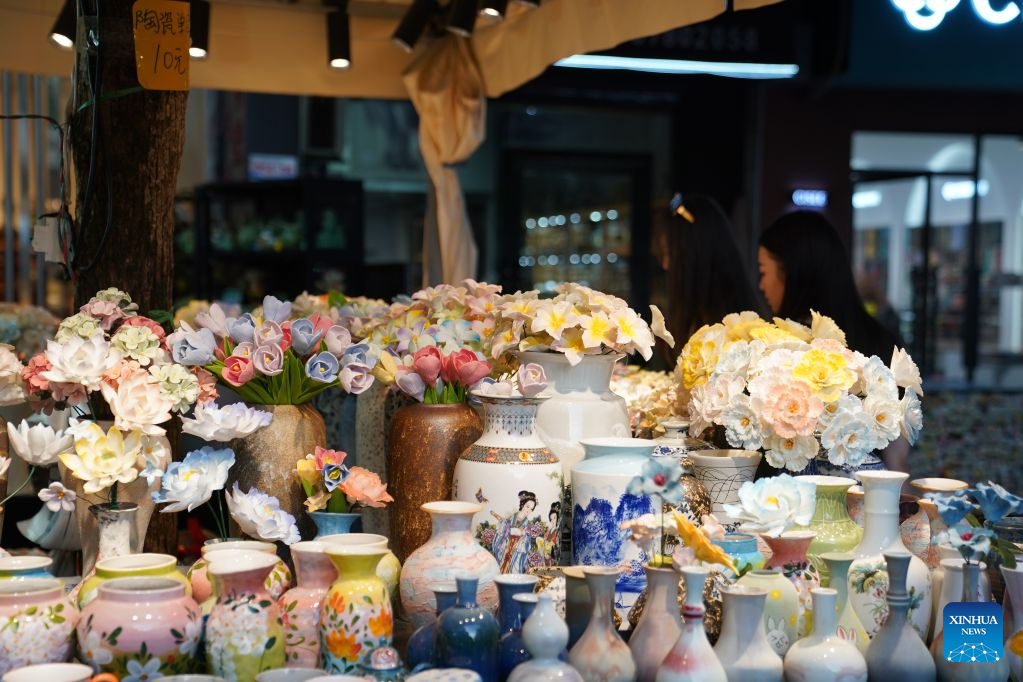
The inclusion of China's Jingdezhen Handicraft Porcelain Industry Sites on the UNESCO World Heritage List marks a massive milestone for global cultural preservation, officially bringing China's total number of World Heritage properties to 61. As a reader following the evolution of global heritage conservation, this designation is far more than just another badge of honor for a historic city; it is a vital validation of an industrial and artistic ecosystem that shaped global trade and material culture for nearly a millennium. Spanning from the 10th to the 19th century, Jingdezhen served as the undisputed heart of ceramic manufacturing, producing blue-and-white porcelain that became a prized global commodity and set the gold standard for quality and artistic expression across international markets.
Looking at the sheer scale of the property, the statistics alone highlight the massive scope of this heritage landscape. The inscribed area covers 1,979 hectares, backed by an additional 5,545.7-hectare buffer zone designed to protect its ecological and historical integrity. The site is uniquely comprehensive, comprising five distinct components: the Town Area Porcelain Production Center, the Hutian Ancient Kiln Site, the Gaoling Porcelain Clay Mining Site, the Changling Porcelain Stone Mining Site, and the Jiaotan Firewood Production Area. This interconnected layout captures the entire supply chain—from raw material extraction to high-end production and fuel management—offering researchers, economists, and historians a rare window into early industrial organization and craftsmanship.
Beyond its historical footprint, the economic and cultural impact of Jingdezhen's porcelain industry has always been staggering. In an era before modern global supply chains, porcelain was one of the earliest truly globalized products, driving cross-continental trade routes and economic exchanges between Asia, Europe, and the Middle East. According to assessments by the World Heritage Committee, the site illustrates the innovative evolution of ceramic technology and manufacturing systems, demonstrating how localized techniques scaled into a global industry that influenced the manufacturing standards of ceramic sectors worldwide. As highlighted in recent reports by People's Daily, the ongoing preservation and sustainable management of these sites require a meticulous balance between tourism development, structural conservation, and rigorous environmental risk management.
To ensure the long-term viability of these historic assets, local authorities and cultural institutions must address potential management challenges through smart urban planning, enhanced visitor capacity controls, and continuous environmental monitoring. As reaffirmed by Rao Quan, vice minister of culture and tourism and head of the National Cultural Heritage Administration, China remains fully committed to implementing the World Heritage Convention and strengthening the integrated protection and sustainable use of these cultural assets. By combining modern digital preservation models with traditional craftsmanship networks, Jingdezhen can successfully safeguard its priceless legacy while fostering cross-cultural dialogue and mutual learning for generations to come.
News source: https://peoplesdaily.pdnews.cn/china/er/30052756428